
The Importance of Physical Media and Why it Still Matters Today
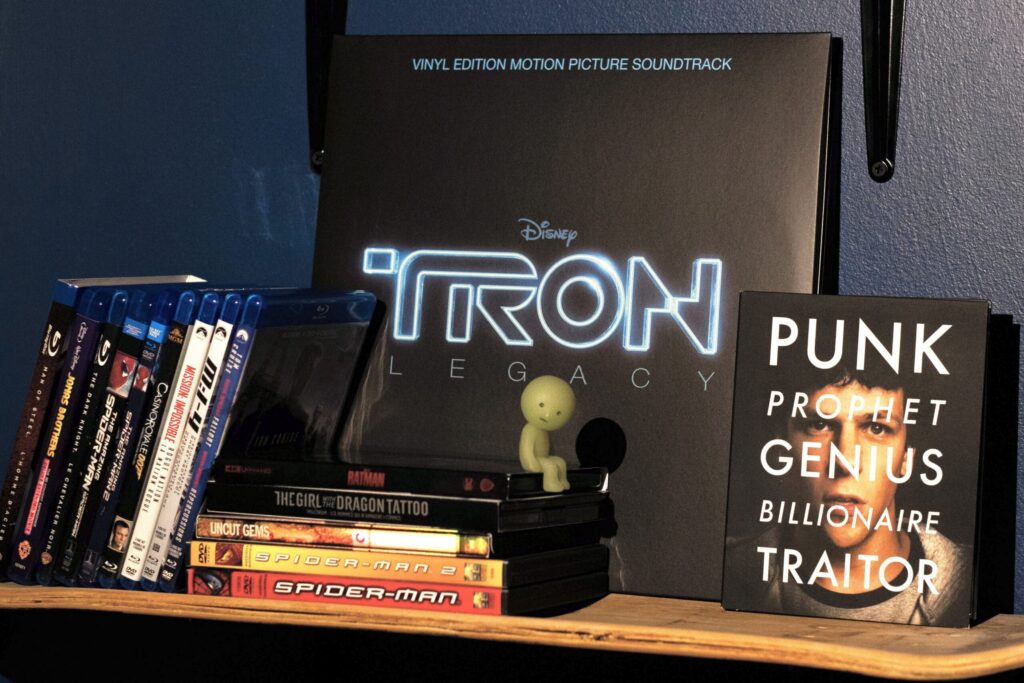
Image Courtesy of the Medium
By Luis Zonenberg
This is an independently submitted op-ed and does not reflect the views of The Tower
I vividly remember my summer back home in Texas last year, especially the time when my family was hit hard by Hurricane Beryl. The whole area’s electricity supply was down, and it took over a week to be restored; by the time it was, it took even longer for us to regain the internet connection in our house. Luckily, I still had my Blu-ray player stored in my room at the time. I was able to bring it downstairs and play some movies for my family to enjoy while we waited patiently for the internet to come back.
I take pride in my physical media collection, always bargain hunting and hoping to find a good copy of a film or show I like. I quite recently got into the habit of collecting vinyl records as well, with my prized collection being a vintage 1977 Vinyl recording of the original Star Wars soundtrack. Yet, a lot of my friends constantly ask me why I still collect Blu-rays and vinyls when I can easily stream them online. The answer to that question is quite clear for many reasons.
We currently live in an age dominated by streaming platforms and social media, which allows content to be viewed more easily on the go. Yet, it’s unlikely that many are aware of the pitfalls this has come with, particularly in the case of censorship. This age has allowed censorship to become so much easier as well, with platforms such as Disney+ outright deleting past content to save money while essentially erasing these shows or movies from existence.
This is downright terrifying, with so much original streaming content at risk of being deleted with a click of a button. Series such as Just Beyond or Willow, while moderately successful, have been removed from Disney’s catalog and now can’t be found to watch anywhere at all. Even big-budget shows like Marvel’s The Falcon and the Winter Soldier had their third episode edited down to remove a lot more of the violence and bloody content for which it was praised.
Even if someone rents or purchases a movie on a digital streaming service, they are at risk of their copy still being censored. But how, though? I mean, if someone bought a digital copy of Superman on Apple TV, surely they own it, right? Well, not really. To be clear, instances like this mean people are directly paying companies like Apple to let them stream the movie on their service, and if said service loses the rights to said product, the consumer cannot do anything about it.
Another factor I want to consider is bitrate, which refers to the amount of video data processed per second. Most streaming services, even if the video quality is in crisp 4K Ultra High Definition, are only processing up to 7 gigabytes per hour. Depending on how good someone’s internet connection is, this is what it can process in a fast and efficient manner. In contrast, one 4K disc can process 20 to 50 gigabytes per hour, which is almost a 300% increase in video processing. This allows the disc to process more information and present a much clearer, distinct video quality than what streaming can offer.
This is not to discourage or condemn anyone from keeping their streaming services, especially since I still use some whenever I am traveling and want to watch something on my computer. However, if I have the option to watch a movie in the comforts of my own home, I want to make sure that I watch it not only in the best quality but also the one I remember watching and enjoying so much in theaters or on TV. While physical media does come with its own pitfalls (mostly storage space), I still believe that it is a necessary commodity in today’s economy and can be preserved for those sentimental enough to share it with their friends and family.