3 NBA Rules That Need to Change
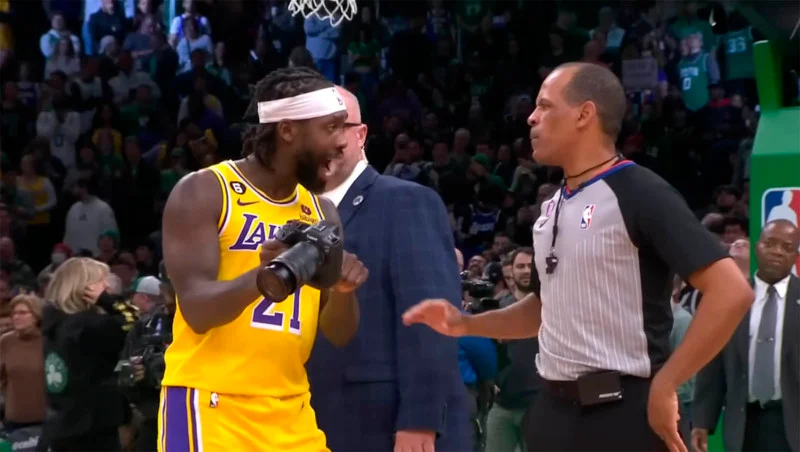
Image courtesy of Peta Pixel.
By Sam Bergstrom
On January 17th, Charlotte Hornets forward Miles Bridges hit a jaw-dropping shot from 3/4 court to end the half against the Golden State Warriors. This shot, miraculous as it was, is actually a result of a recent rule change the National Basketball Association made this past offseason. All shots missed beyond half court are now counted as a team shot attempt rather than a miss for the individual. As a result, players are no longer scared to hurt their shooting percentage—which for many has a big impact on the incentives they earn in their contracts—by taking these near-impossible shots.
Since the implementation of this brilliant new rule, players have been letting heaves fly at half-court and beyond, and the game has become more exciting. In my opinion, there are so many rules that are holding back the NBA from showcasing the fun and beautiful sport that basketball is. The three rule changes I propose will further restore the fluidity and artistic splendor the game has been stripped of in the past decade.
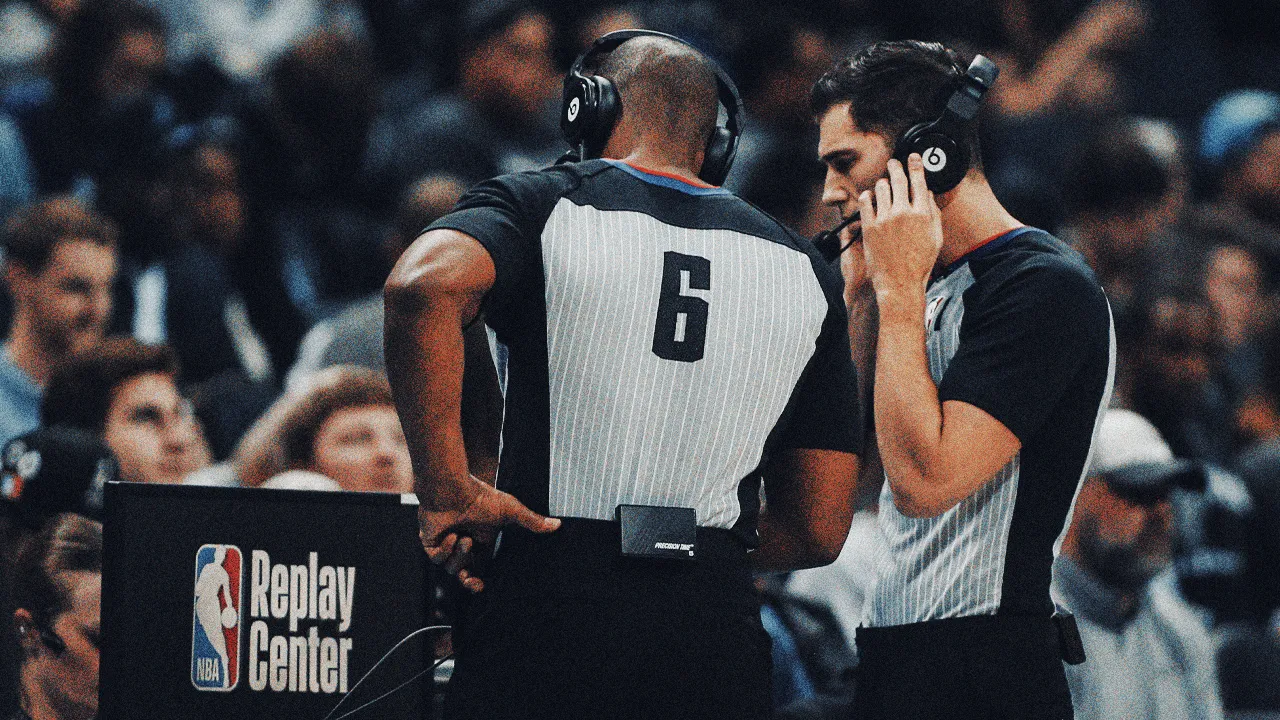
Image courtesy of Sportico.
#3 – Get Rid of Replay Reviews
I know, this is a bit of a hot take. Replays reviews for certain plays can prove to be crucial in deciding the outcomes of games. But at the same time, the NBA is a high-paced game, and it should not need to be stopped as much as it does—especially in crunch time when the fans are on the edge of their seats. I think we undermine how much of a grievance it is to stop the game for multiple minutes to review fouls and out-of-bounds calls.
With each NBA coach now having a challenge per game (two if they win their first challenge), it has also become annoying to watch players constantly yell at their bench to review a call they just know the refs got wrong. At the end of the day, referees are human beings, and they are going to make bad calls. If we are worried this much about getting every single call correct, then why not just hire robots as referees?
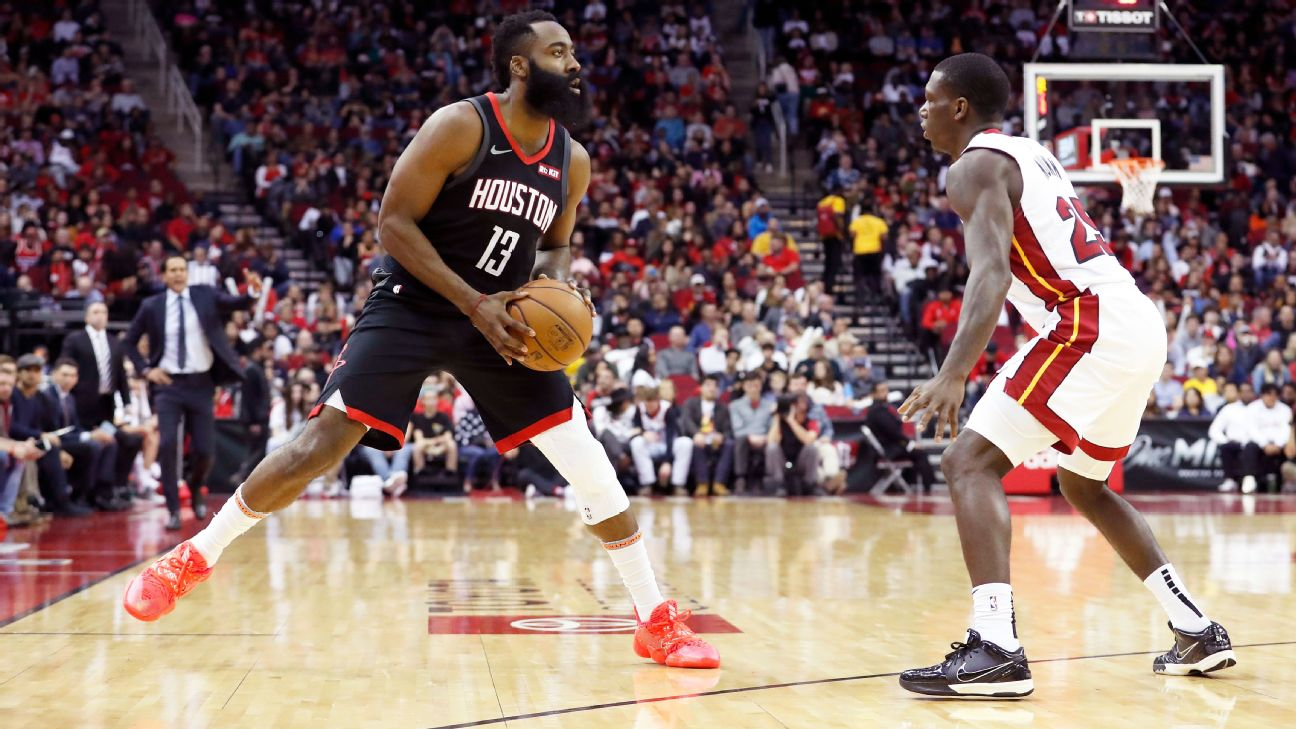
Image courtesy of ESPN.
#2 – Fix Travelling Violations
Have you ever watched a player score a tough basket and then think to yourself, Hmm, that looked like a travel, he took three steps? Yeah, that happens a lot in the NBA nowadays, and we can thank the gather step for it. According to NBA rules, whenever a player gathers the ball after a dribble, they are allowed to take one step. Then, after gaining control of the ball, they can take an additional two steps. So, according to the NBA, one step plus two steps equals two steps, not three; I’m not a mathematics major, but that just seems off.
James Harden’s stepback threes, Giannis’s aggressive eurosteps, and Kyrie Irving’s shake and bake moves all benefit from the gather step. But if you ask me—and any fan who followed the game before the 2010s—they’re all traveling violations. I really don’t understand why this sophisticated rule exists. If a player takes three steps following their final dribble, it should be a travel. Plain and simple.
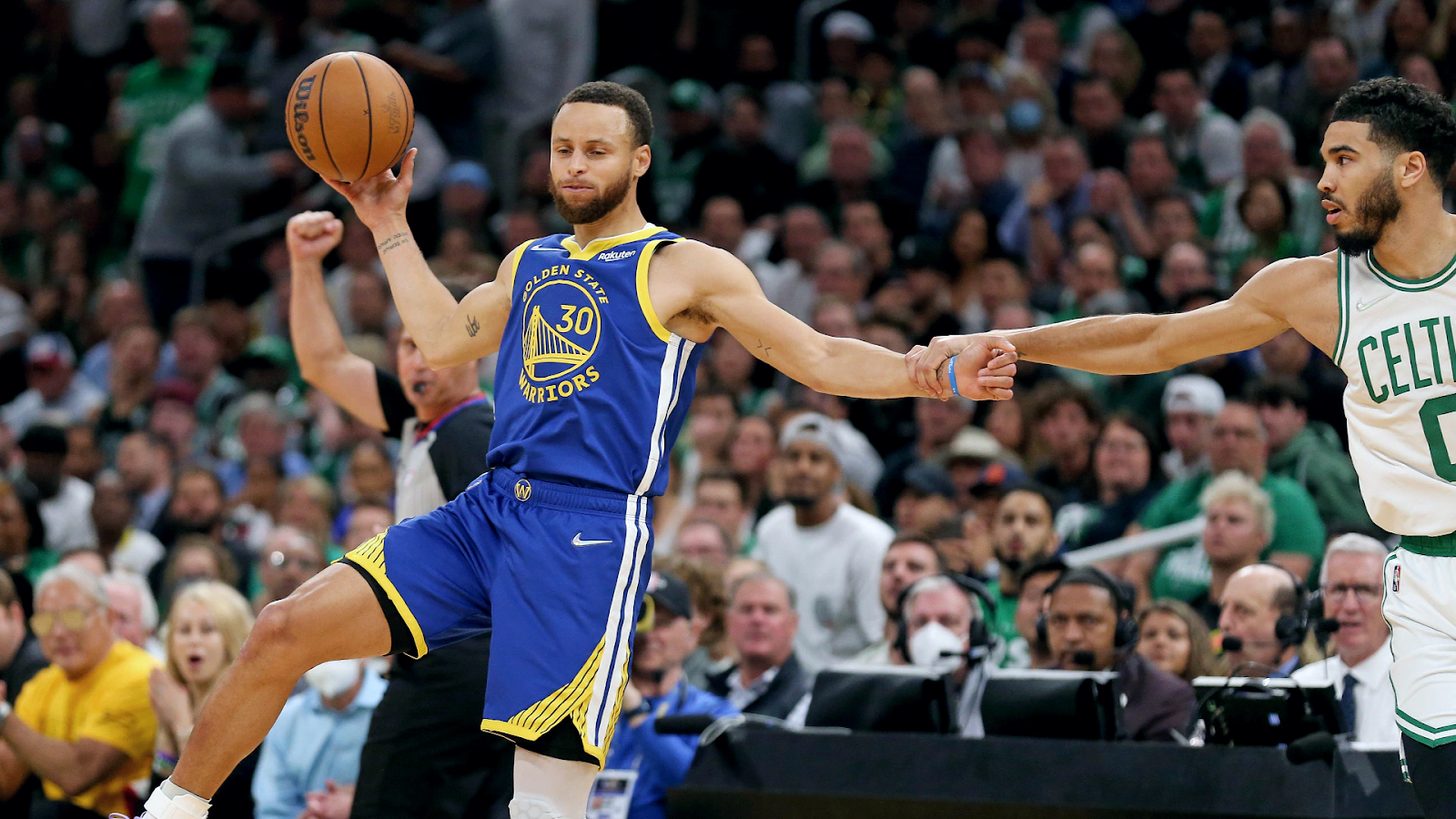
Image courtesy of NBA.com.
#1 – Put An End To “The Foul Game”
Ah, yes, the foul game. Every time I watch a thrilling finish to a game, it always gets ruined by this monotonous strategy. Towards the end of games, both teams are often in the foul bonus—meaning that each team has already committed five fouls. Therefore, any foul, even a non-shooting one, results in two free throws. In a tight two-possession game with less than one minute left, both teams often foul intentionally to put each other at the free-throw line. Say the Boston Celtics are down by four against the Golden State Warriors with twenty seconds left. They can’t get the steal, so they choose to foul the Golden State to stop the clock and get the ball back. After Steph Curry hits two free throws, the Warriors foul the Celtics to ensure they don’t hit a three-pointer and inch their way back into the game. After Jayson Tatum hits his free throws, Boston fouls Golden State, and this painful cycle continues until the game ends.
In my opinion, teams in the foul bonus should not get two shots at the free throw line in the fourth quarter/overtime. Instead, the player who is fouled should be granted one free throw, and their team should receive further possession side out. With this change, players would be far less incentivized to foul and would be required to go for steals to truly get back into the game. On the other end, the team that is leading would have to hunker down on defense rather than putting the other team at the line.