
Spring Break Trip in London
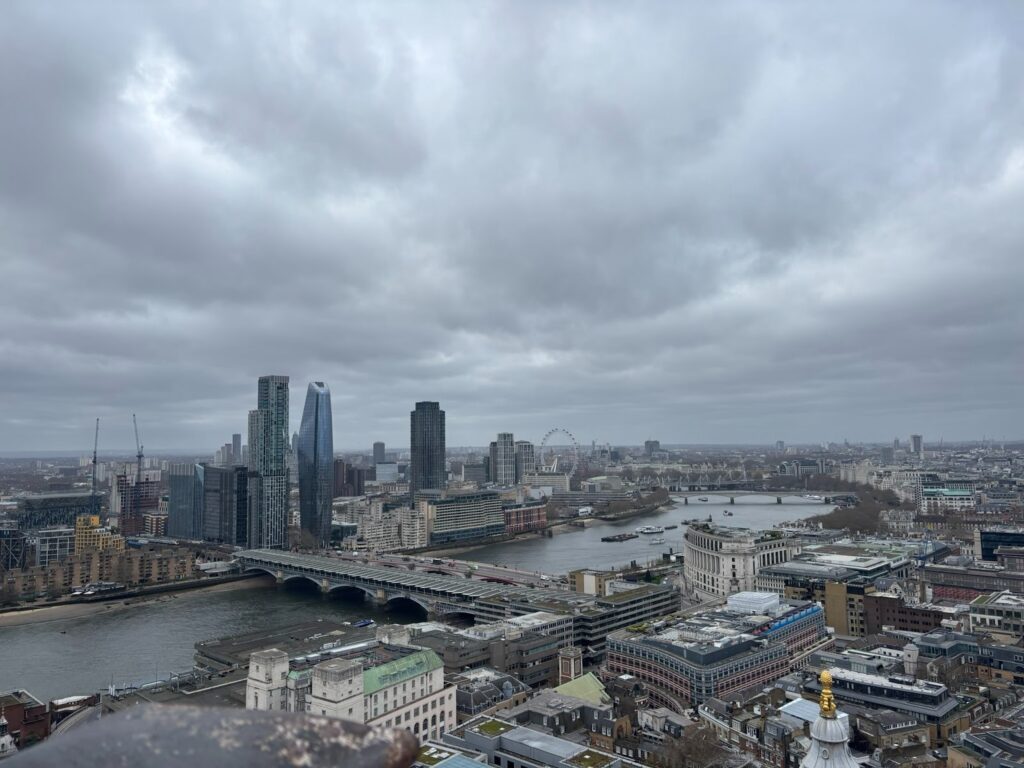
The view from St. Paul’s Cathedral, Image Courtesy of Kiersten Patin / Tower
By Kiersten Patin
My ten days of spring break consisted of wandering through the history of London. The Honors Program planned our trip chronologically from London’s Roman to modern history. In only this brief time, I was able to visit Roman walls, ancient cathedrals, Hampton Court Palace, the Churchill War Rooms, the Sherlock Holmes Museum, Daunt Books, and the Charles Dickens Museum. What really struck me was the dynamic of the past and present in the places we visited.
The start of the break began with a brief walking tour around the President’s Hotel where, interestingly enough, the Beatles had once stayed. Near the hotel is Russell Square, where members of the literary Bloomsbury Group resided, including Virginia Woolf, T. S. Eliot, and Oscar Wilde. I felt myself in a daze, seeing places like Westminster, Trafalgar Square, and Buckingham Palace, that I have known for so long only through stories and photographs.
The next day, a few of us went to mass at St. Anselm and St. Cecilia, a Catholic church sandwiched between buildings and a small street that Christians used to walk on their way to be martyred. After lunch at a pub, we walked to the British Museum. Amazed, I saw artifacts I had only seen pictures of: the Sutton Hoo helmet, Frank’s Casket, the Rosetta Stone. My night concluded with a spontaneous trek along the Thames with some friends, and seeing the courtyard of the Globe Theatre.
Before visiting the Tower of London, we had a walking tour around remnants of the Roman Wall. At the Tower, I saw the dazzling crown jewels. Then I went to the armory showing model horses and knightly gear of previous kings, and to the chapel where the kings used to pray.
Reaching the bottom of one spiral staircase, I entered a dim, plain stone room where I saw the gift shop. From our tour earlier, I knew that I had stumbled into the dungeon where prisoners were held and tortured. Despite being late for the regrouping, I was stunned for a moment, realizing just how dark, damp, and isolated it would have been. But I had to continue. Finally emerging outside, I met the group, watching the pet ravens waddle about all while trying to reconcile these images swirling in my mind, the prestige and the terror.
On the third day, we took an early bus to Canterbury. Having arrived a little before our tour began, we were able to walk around the town for a while and stop in a cafe. The Cathedral was breathtaking in its vast, high ceilings and stained glass windows. On our tour, we walked through the cloisters, into the chapel where St. Thomas Becket was killed, and into the crypt where he was buried for a time. We saw the damage that Cromwell and the Puritans had inflicted by defacing statues, but in the main church, we saw the worn crevices from the knees of pilgrims who climbed up the stairs to pray. In our free time, we were able to wander the beautiful—almost fantastical—town with its cobblestone roads, row houses, small shops, and a garden neighboring a flowing river.
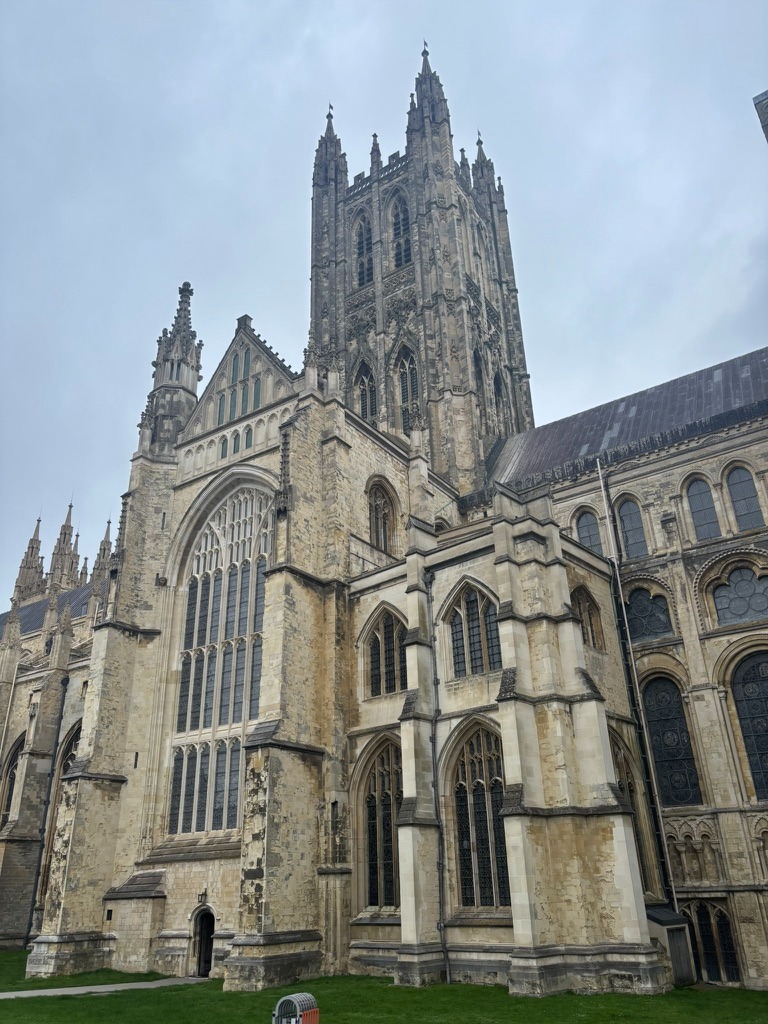
Canterbury Cathedral, Image Courtesy of Kiersten Patin / Tower
The next day, we went to Westminster Abbey. Following an audio tour, I wandered through, seeing the tombs of the kings and queens as well as the Poet’s Corner. Then I had a lovely afternoon tea at the Rubens and saw The Phantom of the Opera with friends. After a tour of St. Paul’s Cathedral the following day, a few of us climbed the 528 steps to the top spire where we had breathtaking views of London. It also helped me to understand the effort of volunteers in the Blitz who climbed to the top dome and extinguished incendiary bombs to preserve the cathedral, although they were climbing in the dark with buckets of sand while bombs fell around them.
While walking through streets and touring landmarks, I could feel the depth of the history within the land. It was a feeling of knowing you were walking on the ground so many have walked for centuries before you—martyrs, royalty, soldiers, writers, leaders, and civilians who all have shaped the nation. Their legacy is effused into the cozy row houses, the sleek skyscrapers, the square parks, the curve and breadth of the streets, and the historic stone castles. The past is tangible as the present is lively. People pass in a hurry along ancient paths, double decker buses squeeze through narrow streets, taxis and pedestrians flock the roads in alternating shifts, and friends gather outside pubs and shops comfortably nestled along cobblestone alleyways blanketed in diagonal lines of lights. The two are blended, coexisting as they always have throughout London’s history. I feel that now I can understand to a greater extent the quote from J. R. R. Tolkien that had been circling in my head throughout the trip: “Though in all lands love is now mingled with grief, it grows perhaps the greater.”