James Gunn’s Firing from DC Marks the End of the Franchise’s Bright Future
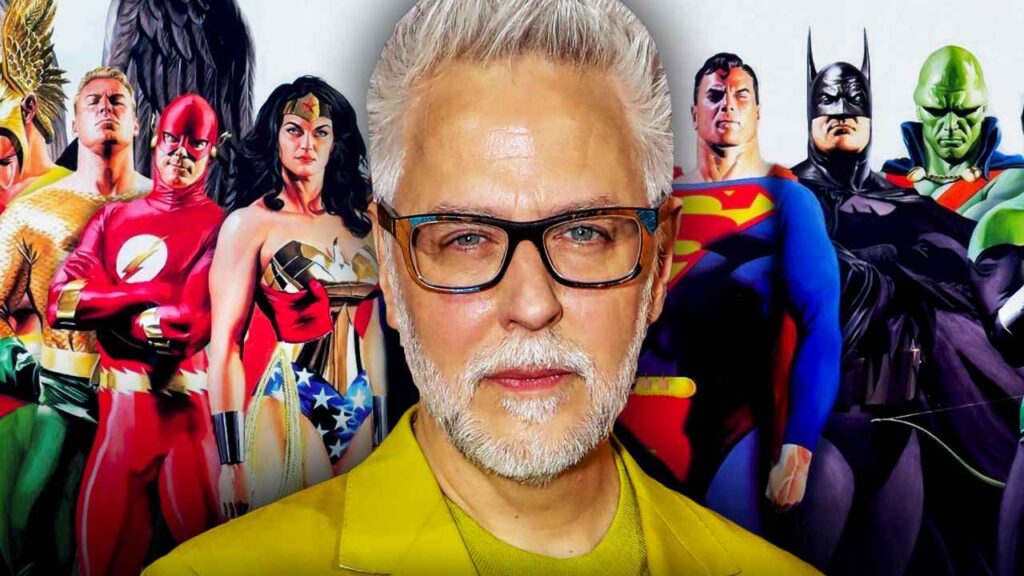
Image courtesy of The Direct
By Ryan McGinn
Both the media and the general public were shocked on Monday, Nov. 9, when it was announced that the co-heads of DC Studios, James Gunn and Peter Safran, were stepping down. They will be replaced by former Marvel Studios producer Jeremy Latcham.
This news comes after the recent Warner Brothers-Discovery acquisition and the merger with Paramount-Skydance, now under the name Skydance Media, which is owned by millennial billionaire David Ellison. The mega-conglomerate merger’s approval caused a lot of controversy in the world of cinema and among fans of the DC Universe. Fans like me are justifiably disheartened and fear for the franchises’ future.
Gunn and Safran’s positions as heads of DC Studios seemed to be safe after the merger, with Skydance co-CEOs David Elison and Ynon Kreiz seemingly on board with the proposed 10-year plan and having added them to his board of creators.
On Oct. 21 of this year, DC Studios released Clayface, a low-budget horror movie that just passed $120 million globally on a $44 million budget. Gunn also just finished filming his Superman sequel, Man of Tomorrow, scheduled for release in Summer 2027. Rumors have since circulated that he is currently writing a third Superman film that would evolve into future Justice League films.
So it was a shock when James Gunn posted a heartfelt message to his Instagram announcing his departure.
“Oh, boy. What a four years. Thanks to all of you who have supported me and Peter in our time as the heads of DC Studios.”
He reflected on his time as co-head, thanking all of his collaborators, cast and crew, the fans, and his studio partner Peter Safran, calling him “the best partner a person could ask for, and, more so, a truly good friend.”
He also admitted his struggles with the position.
“What only the closest people to me have known over the past four years is my time at DC Studios has been trying, to say the least. I dislike the at-times corporate nature of the job,” Gunn stated. “I’m always a very hard worker, but as a filmmaker I would at least get to take short breaks to unwind, and I’ve stolen even that time from both myself and my loved ones over the past four years”
He did announce that he will complete production on Man of Tomorrow, and that he is still working on another DC project as well, supposedly the third Superman movie.
On the surface, this seems pretty cut and dry: Gunn was unhappy in his role and saw the new Studio merger as a way out, but according to The Hollywood Reporter, Gunn and Safran were fired from their roles by the new Skydance leadership.
“According to sources, the DC heads were told that despite previous assurances they would be part of the new Skydance mega-studio, Ellison and Kreiz had a change of plans.”
According to the report, on Friday, Nov. 6, only three days before the announcement, Gunn and Safran were called into a meeting with the new Skydance heads of film, where the news was broken to them.
The reason for the firing supposedly stemmed from many problems the Studio had with Gunn and Safran. They cited 2026’s Supergirl as a “disaster” after its critical and financial flop. Even the critical and Financial hit of Superman, making $618 million, was not seen as profitable enough and “lacked pop culture impact”, which seems absurd considering it was the most successful comic book film of that year and had huge social media and pop culture popularity.
Even last month’s DCU series Lanterns has not been renewed for a season 2, after it “failed to capture the zeitgeist,” even after it was the 3rd biggest HBO series ever and averaged over 20 million views per episode, consistently outperforming Marvel series like the new VisionQuest, which averaged only about 3 million per episode.
It seems that the problem might have also been a lack of studio control. After their hiring in 2023, after the WB-Discovery merger, Gunn and Safran didn’t just take over DC; they formed a new division of WB, DC Studios, where instead of being controlled by WB film heads and execs, they had full creative control and reported directly to the CEO.
This was a great change because DC had failed in the past due to executives co-opting creative control from directors and creatives, completely changing their vision for films because of fears it wouldn’t appeal to general audiences, most notably with 2017’s Justice League and 2016’s Suicide Squad.
The Skydance executives supposedly didn’t like this creative autonomy the studio had. Ellison and Kreiz wanted direct control over the projects, and David Ellison wasn’t interested in being reported to, saying that he “didn’t have time.”
Apparently, the studio had been in talks with the heads’ replacement since early fall, all while telling Gunn and Safran, as well as the public, they were staying on.
Fans have been extremely vocal about their displeasure with this decision. Social media has exploded with outrage from fans and non-fans alike, seeing it as a betrayal of Skydance’s promises and a decision motivated by corporate greed and control.
Controversy has also stemmed from the newly appointed President and Chief of DC Studios for Skydance, Jeremy Latchem, after an appearance on the Bible Bros Podcast where he said that during the production of the early Marvel movies, “I don’t know if my grandma would like that” became a guiding principle during his time in deciding what should be in the movies. He also stated his hatred of R-rated films.
Fans don’t see this as a good sign because they have grown to love the DCU’s creative and tonal diversity. Under the DCU, projects have had the ability to explore dark themes and not shy away from violence. Projects like Peacemaker, Lanterns, and Clayface did not shy away from severe violence and artistic expression while allowing them to explore themes of racism, cultural identity, and beauty standards.
Weighing a project’s quality on general audience appeal is not a proven method of success, especially when it can alienate the loyal customers of the property: fans. So a future where projects are decided based on whether your “grandma would like” is disheartening, to say the least.
Ellison has also supposedly made it a priority for Batman, Wonder Woman, Aquaman, as well as the Justice League, to return to the big screen as soon as possible.
This mandate seems obviously motivated by greed because those are the characters that have proven to be the most financially successful in the last decade. The mandate of getting them made as fast as possible also indicates that the studio values the speed of the film’s production rather than its quality.
Skydance is in over 80 million dollars of debt. They would need over 50 Avengers: Endgame-level successes to recoup their losses. Insiders say if they don’t profit off of DC fast, selling properties is “not out of the question,” as well as wanting to use generative AI to cut costs by “streamlining the creative process.”
DC seemed to finally be on a good trajectory. 2025’s Superman restored audiences’ faith in DC and introduced new audiences to its characters; there seemed to be a plan toward which the universe was building, and the creatives that were passionate about the property and the projects were given control of their work.
James Gunn is an extremely successful and talented comic book director, and while some fans had become critical about giving the spotlight to more unpopular characters and a lack of projects for big-name characters, Gunn cared about the characters and the quality of the projects, and had a clear plan for the universe that fans were excited about.
James Gunn already has a successful background in Marvel, directing the Guardians of the Galaxy Trilogy. If Skydance wanted to repeat the Marvel Cinematic Universe’s success by hiring Latchem, they already had the right man.
But in what seems like irony at this point, history repeated itself.
To me and many fans, it seems that this decision was motivated by a need for power and creative control over the DC properties. This new leadership does not care about creative risks or building a universe; they care about immediate profit, and that is telling of where DC is headed in the future.
Skydance executives reportedly “did not anticipate” the intense fan backlash and financial impact. Skydance has lost 5.6 billion dollars in market value, with a 13% drop in the stock market in just the last 5 days since the announcement.
A fan petition to keep James and Peter Safran as heads of DC Studios has reached 250 thousand signatures, with most of them coming from the last 3 days, becoming the fastest-growing petition in Hollywood history.
We can only hope that Skydance sees this backlash and rethinks their decision, or brings James Gunn back in some capacity, because with the trajectory they’re on, DC is headed for a dark future.