
Act While You Can: The Importance of Student Protests, and Why You Should Care
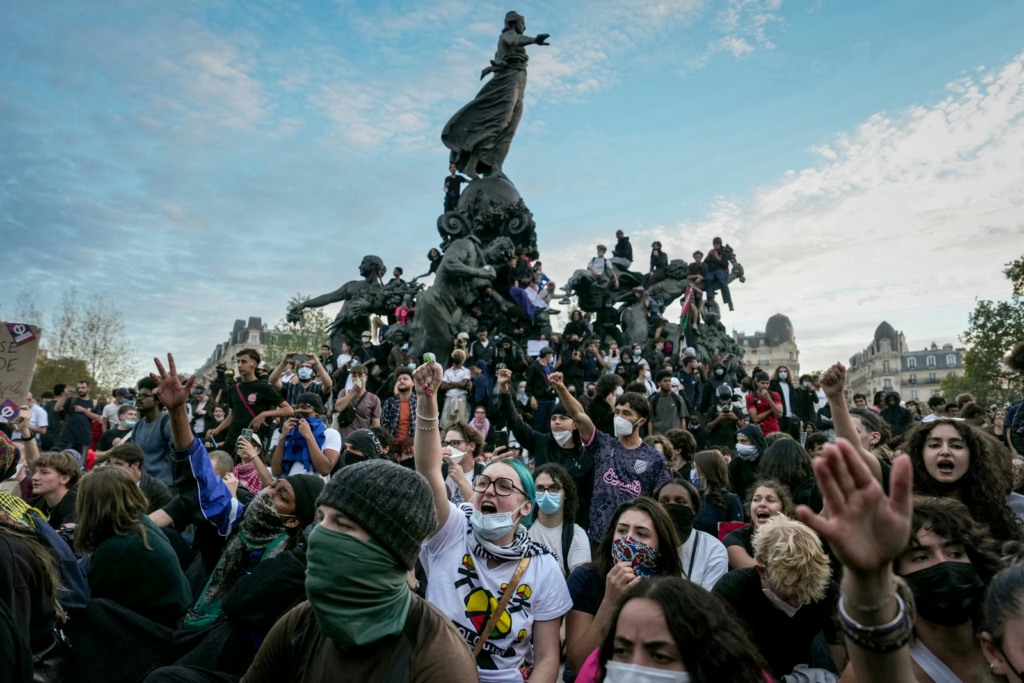
Image Courtesy of The Atlantic.
By Lillian Murphy
There’s a privilege that comes with being young and in college. With access to an education and the freedom to exercise it in pursuit of something greater, students will frequently find themselves involved in some form of political or social action. Students have long been a major demographic when it comes to taking part in social or political demonstrations for a multitude of reasons. Younger generations are generally less conservative than those that preceded them. Young people also often feel as though they have nothing to lose— it’s why they’re more likely to experiment with drugs, alcohol, and, evidently, activism.
The riots and protests currently afflicting France are one example of the type of social involvement that seems to appeal to young people. Discontent with a multitude of issues facing the French education system, such as staff shortages, overcrowding, and poor funding, crowds led for the most part by high school students have taken matters into their own hands, demanding that the French government address these concerns. This is the largest student protest France has seen in decades. However, large-scale protests organized by students have been happening around the world for centuries.
The first recorded student-organized protest was, coincidentally, in France in 1229. In response to disagreements between the University of Paris and local authorities, students and professors arranged a strike, walking out and effectively closing down the University for two years. During the Vietnam War, student protests were a popular way for the youth to express opposition to the draft. In May 1970, a nationwide student protest went into effect across the United States, with nearly 900 campuses participating (including Catholic University, which you can read about in the May 8, 1970 edition of The Tower). The protests were in response to President Nixon’s announcement of military operations in Cambodia and the shooting of Kent State University students by National Guardsmen. On Saturday, October 24, thousands of students participated in demonstrations across Italy, protesting a variety of issues. Almost 800 years since the first recorded instance, students have continued to be instrumental in the constant fight for progress.
Throughout history, students have been the most consistent demographic when it comes to activism. According to data from the Pew Research Center from 2020, young people aged 18-29 make up 41% of protest participants, and on Oct. 26, the Kettering Foundation published a report stating that higher education also often coincides with participation rates as well. Student-organized demonstrations have long been effective throughout the world in demanding change. So what is it about students that makes them such a major and essential part of movements for social advancements?
Most college students live in a sort of bubble where they feel secure enough to explore and engage in different belief systems and lifestyles. The majority of them aren’t paying bills or worrying about where their next meal will come from; they don’t have children to care for or a 9-to-5 to stress over. Many undergrads are protected from the concerns that can make adults indifferent to greater issues. Some would make the argument that such an opportunity demands action before the world exhausts you into apathy. It’s because of this privilege that students have a responsibility to take interest and participate in social activism. We will only have this unique inclination to our passions for a little longer, so it’s important to seize the opportunity while we can.
So do what you are called to do. Sign that petition, participate in that march, pray for those in need. You are the lucky recipient of a special opportunity. Use your education, your moral clarity, and your free time to do something real. And thirty years from now, when some well-meaning teenager tries to educate you on problems you’ve been aware of since before they were born, give them some grace. They are just trying to care while they still have the capacity to.