Literacy: Once a Vehicle of Power, Now a Common Burden
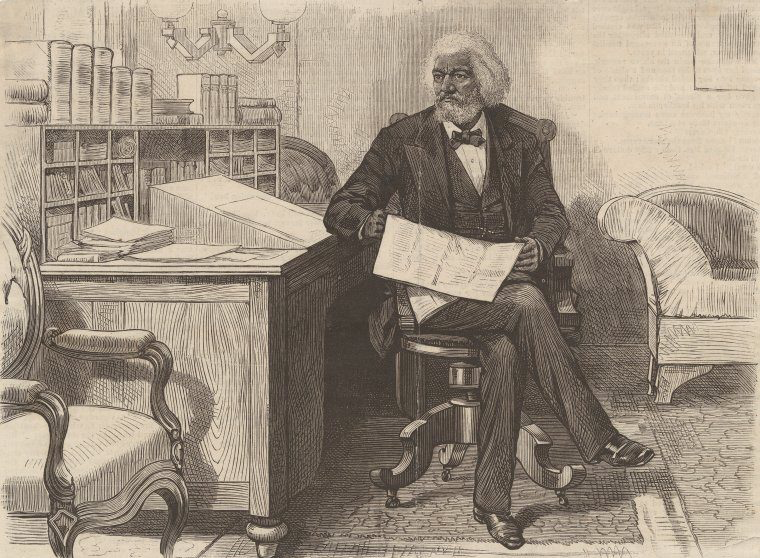
Image courtesy of AAIHS
By Margaret Varadan
This is an independently submitted op-ed and does not necessarily reflect the views of The Tower.
There was once a time when the importance of being able to read could be likened to the value of pure gold. In the 1800s, when America ran on slavery, this treasure came to be recognized by both the oppressors and the oppressed, for reasons of both fear and hope, respectively. Even in the present day, tyrannical powers such as the Taliban recognize the strength that comes from giving women a voice and education; so any and every effort has been put into their regime to suppress these vehicles of freedom. So why is it that in 21st-century America, the ability to read and to understand is so intensely undervalued by the youth when only two centuries ago, the color of your skin determined if you were allowed to pursue an education? Why is it that the possibility of being able to simply sit in a classroom and be instructed is so disregarded in this country when it is so sorely yearned for by girls in a different part of the world?
Frederick Douglass, a former slave and later an American abolitionist, recounts in his Narrative of the Life of Frederick Douglass both the experiences he underwent in his pursuit of freedom and what each of those experiences meant in reflection of the oppression perpetuated by his various masters. Included in this narrative is a story of how one of his masters, Mrs. Auld, began to teach him the alphabet before her husband forbade her to stop teaching him.
As Mr. Auld explained, “If you teach that (censored) how to read, there would be no keeping him. It would forever unfit him to be a slave. He would at once become unmanageable, and of no value to his master.” (Douglass, 1090 in The Norton Anthology of American Literature, tenth ed.)
Far from being deterred from learning to read, however, Douglass perceived this admonishment as a turning point in his life and the very moment he would become what the South feared most.
“What he most dreaded, that I most desired. What he most loved, that I most hated. That which to him was a great evil, to be carefully shunned, was to me a great good, to be diligently sought. And the argument which he so warmly urged, against my learning to read, only served to inspire me with a desire and determination to learn.” (Douglass, 1091.)
What Douglass understood in this moment is that without knowing how to read, you cannot fully understand what you do or do not have. You cannot demand what you are owed. You are never completely aware that there is something wrong with how you are being treated, because as you have understood your entire life, “that’s just how it is”.
CBS News released an article, “We visited a secret Afghan girls school. They surprised us with handwritten ‘Letters to the World’”. As the title explains, teenage girls at this secret school each shared a letter in which they explained their hopes, fears, and overall messages to the rest of the world.
“I am writing about myself: A girl who dreams of becoming independent. A girl who dreams of helping and serving others. A girl who dreams of being able to study. Perhaps in other parts of the world, what is every girl’s right is something completely ordinary. But in my country, it has become an impossible dream.”
Such is written in one of the letters signed by a girl named Bano. An education beyond the sixth grade, which may be expected and even dreaded by young Americans, would be almost completely unattainable if they were born female in a different country.
I do not wish it to be believed that it is completely the student’s fault for being unenthusiastic about the material being taught. The American public system continues to deploy methods of teaching which are passive in nature. Teachers often give the impression that they just stumbled into their profession, opting to give students worksheets and other mundane assignments rather than attempting to teach in an engaging manner. Despite this unfortunate reality, teenagers should still be able to look at education outside of what they are immediately given as something to be prized.
Literacy has not lost its value. It is not the case that what was once important is unnecessary now. Students may believe that simply reading a summary of a book and getting a good grade on the assignment counts as being successfully educated. This is absolutely not the case; to prevent yourself from truly conceiving the meaning of a text and writing profound reflections on it, you’re locking up your own mind and throwing away the key. If you never learn how to apply your own thoughts to a work of literature and extract the concepts it offers, you will never be fully independent.
The perfect subject to a corrupt environment is one who is oblivious, undereducated, and quiet. The reality of just how infected our country is with the sway of evil authority figures is becoming more and more known to younger generations of Americans as news stories break out exposing those who are meant to lead us, and yet many still do not recognize the connection between abuses of power and the self-deprecation of literacy. “Knowledge is power” has always been a well-known, somewhat vague saying with multiple meanings attached. At the very least, we should understand that the absence of knowledge is the key to a docile population, while a surplus of it provides resistance to echo chambers and groupthink.
Angelina Jolie, upon receiving the Jean Hersholt Humanitarian Award at the 2013 Governors Awards, said, “Across the world there’s a woman just like me, with the same abilities and the same desires, same work ethic and love for her family, who would most likely make better films, and better speeches — only she sits in a refugee camp. She has no voice. She worries about what her children will eat, how to keep them safe, and if they’ll ever be allowed to return home. I don’t know why this is my life and that’s hers.”
It is our responsibility as citizens of a country of opportunity to do what others cannot simply for the crime of how and where they were born. Do what they cannot, learn what is hidden from them, and come to view a weapon as an asset instead of a liability.