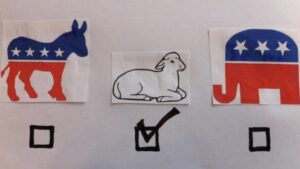
Something Has Got to Change
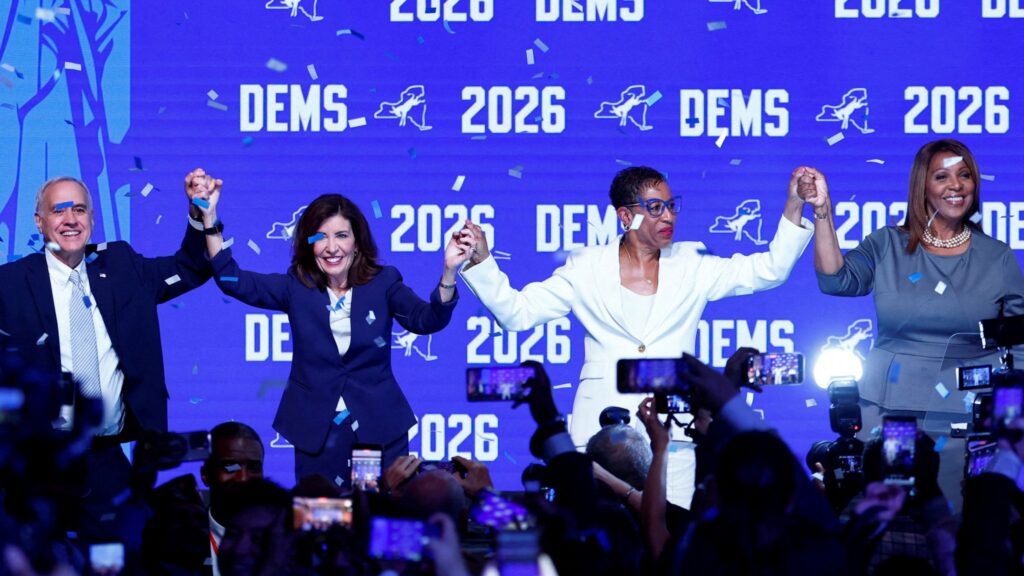
Image courtesy of Sky News
By Paul Manetto
This is an independently submitted op-ed and does not reflect the views of The Tower.
A thumping. A shellacking. A wipeout. A blue tsunami.
All of this describes what just happened to the Republican Party in the 2026 midterm elections. To see just how bad it was, look at it through the lens of the other two sixth-year midterms this century.
In 2006, Republicans lost six Senate seats, thirty-one House seats, and six governorships. While a horrible result for the GOP, only two of the Senate seats lost were in traditional “red” states; the other three were in swing states, and just one of them —Rhode Island — was a solid blue state. The same was true of the governor’s races, with only one lost in a deep red state.
Jumping ahead to 2014, this year saw some of the best showing for the Republicans this century, with the party gaining nine Senate seats, thirteen House Seats (up from an already large majority) and 4 governorships. However, similar caveats apply as above. Of the nine Senate seats won, only one came from a Democrat majority state. The governor’s races were a much bigger shift, with three coming from deep blue states. It is worth pointing out that the GOP also lost two governor’s races, giving Democrats a silver lining.
Compare those results with tonight. As of the time of writing, Democrats have flipped seven seats and are leading in two other races. Of these flips and leads, a whopping seven came from states Donald Trump won by double digits in 2024, and a single state — Maine — saw incumbent Susan Collins defeated after winning her last election in 2020 by 8 percentage points. Governors’ mansions were also a bloodbath for the GOP, with 3 of the 5 seats flipped coming from red states. House races are a slow count, but despite an era of heavily gerrymandered and decreasingly competitive districts, Democrats have gained twenty-seven seats, with many more still up in the air.
Leading up to Tuesday’s election, much of the talk was about how accurate polls would be; in past elections, Republicans had reason to hope that things wouldn’t turn out as bad as predicted, with polls infamously underrepresenting their candidates in the past. This time around, this was not the case; in fact, polls overrepresented Republicans in many close races, including Florida, South Carolina, and Iowa.
In politics, it is often said 2028 begins the day after the midterm elections. If this is true, the GOP needs to think very carefully about its next steps as a party. Mr. Trump entered office with a 50% approval rating; now it sits at around 40%. The drop began when DOGE cuts were implemented and plummeted after the “Liberation Day” tariffs. From there on out, the war in Ukraine, ICE riots, the government shutdown, the Greenland conflict, the monument wars, Epstein and, of course, the war with Iran continued to squeeze whatever favorable opinion Trump had from the American public.
To many conservatives, what makes Mr. Trump’s actions all the more contemptible is how he has approached certain issues. Cutting government spending is not unpopular in and of itself, but when it is led by the richest man in the country, people start to get angry.
Similarly, when Mr. Trump entered office, his approval rating on immigration rose by 5%, with many Americans supporting the idea of closing the border and removing illegal aliens. What many Americans did not want, however, was the showboating of deportations, be it Kristi Noem playing ICE agent or sending detainees to Guantanamo Bay just to send a message.
Finally, in 2024, the economy was the most important issue to voters according to a Gallup poll. People remembered the economy of the first Trump administration, where real income rose by almost 3%, and cast their vote for him in hope of returning to that success. Between tariffs and the war in Iran, prices have skyrocketed, and voters have felt it in their wallets. In the end, how much money you have in your pocket is a pretty easy way for voters to determine who they want to vote for.
So what should the Republicans do next? If they keep on the current path, it seems very likely that 2028 will make 2026 seem like a blue trickle in comparison. Not only will Republicans lose the presidency, but there are an additional five Senate seats they have to defend in states Democrats won this year, plus the swing state of Wisconsin. It’s not inconceivable that Democrats could achieve a filibuster-proof majority, alongside a Democratic president in the White House. This brings us back to the question: what should Republicans do?
Two words: Man. Up.
For the past ten years, we have watched as nearly every prominent Republican politician has bent over backwards to Mr. Trump’s every request. From denying elections to abandoning their free trade and globalized foreign policy, the GOP relished every opportunity it had to show Mr. Trump, they were his lackeys.
What happened to those who spoke out? Liz Cheney, Bill Cassidy, and even John Cornyn are among those who dared to be bipartisan and found themselves losing the primaries to opponents who carried the Trump endorsement.
Elected Republicans have an incentive to stand up to Mr. Trump now — being primaried is no longer their biggest threat; losing the general election is.
So that’s the first step: elected Republicans need to show some (or more like a lot of) backbone. But what about Republican primary voters?
Come 2028, the new best strategy is to take whichever candidate Mr. Trump endorses and run in the opposite direction. The GOP has many bright, talented, and electable leaders waiting in the wings; Indiana Senator Todd Young, New Hampshire Governor Kelly Ayotte, and Georgia Governor Brian Kemp are a few standout names. If Republicans really wanted to make a point, they would nominate Louisiana Senator Bill Cassidy, a man of principle who voted to impeach Donald Trump. A choice like that would help distance the party from the clearly tarnished legacy of the Trump Administration.
Midterm elections are a healthy part of politics. They show us where the country is at, give voters a chance to weigh in, and help those in power see what impact their decision had. The cards are stacked against the Republicans at the moment, but there is a chance to salvage the situation come 2028 — only if they are willing to separate themselves from Mr. Trump. If not, look out: the next blue wave is on its way in.