Conference at Catholic University Explores Catholic Connections to Declaration of Independence
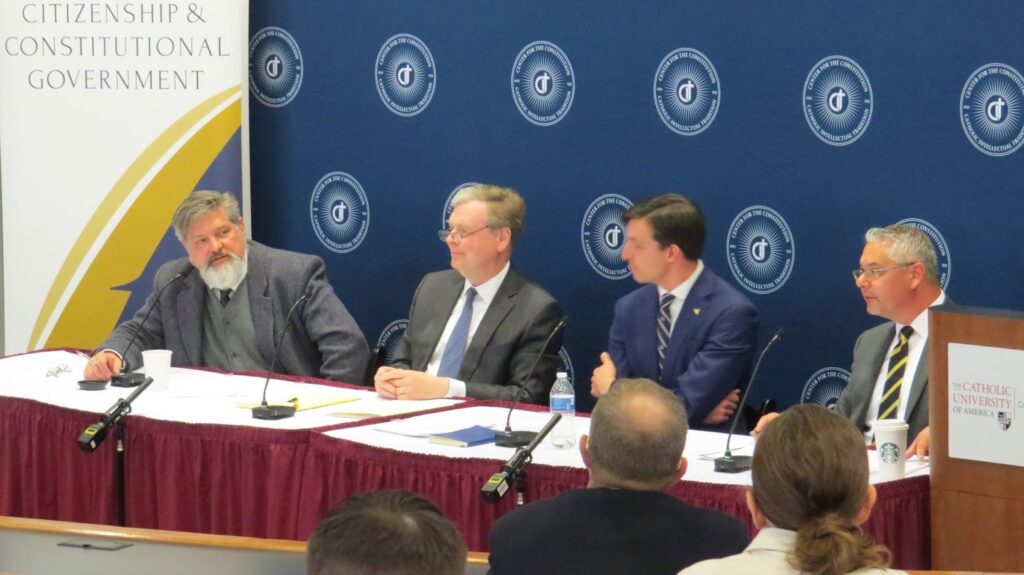
Photo by Patrick D. Lewis/The Tower
By Patrick D. Lewis and MaggieMae Dethlefsen
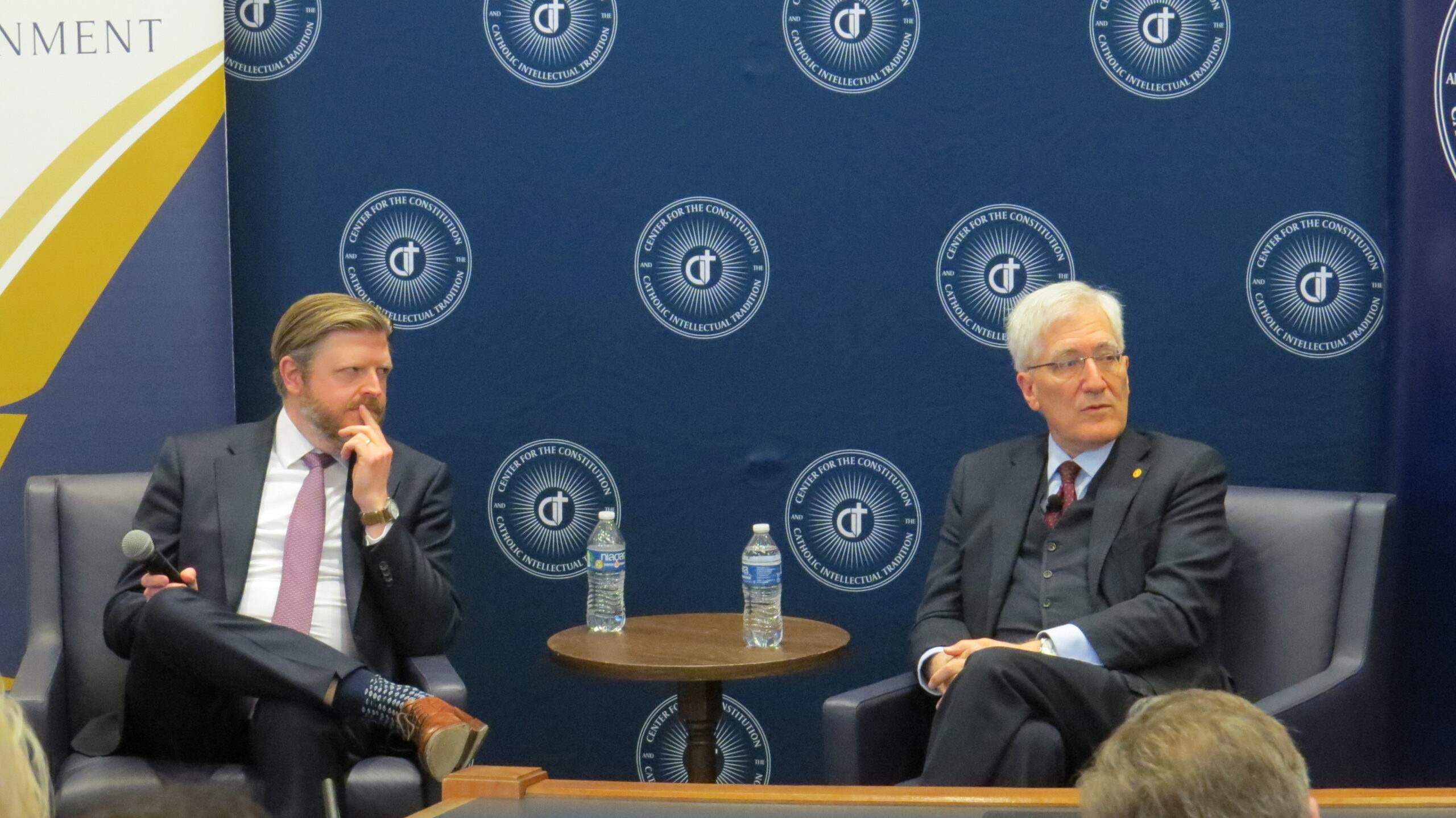
A conference April 9 at Catholic University explored the connections between Catholic intellectual thought and the Declaration of Independence as part of CUA’s celebration of the 150th anniversary of the signing of America’s founding document.
The conference was cosponsored by The Center for Citizenship and Constitutional Government at the University of Notre Dame, CUA’s Center for the Constitution and the Catholic Intellectual Tradition, and CUA’s Carroll Forum for Citizenship and Public Life and was hosted by the Columbus School of Law.
The conference featured several panel discussions, one of which was a conversation between Dr. D.C. Schindler, a professor at the John Paul II Institute, Dean V. Bradley Lewis of the CUA School of Philosophy, and Dr. V. Philip Munoz of the University of Notre Dame. The discussion was moderated by Dr. Michael Promisel of Catholic University’s politics department.
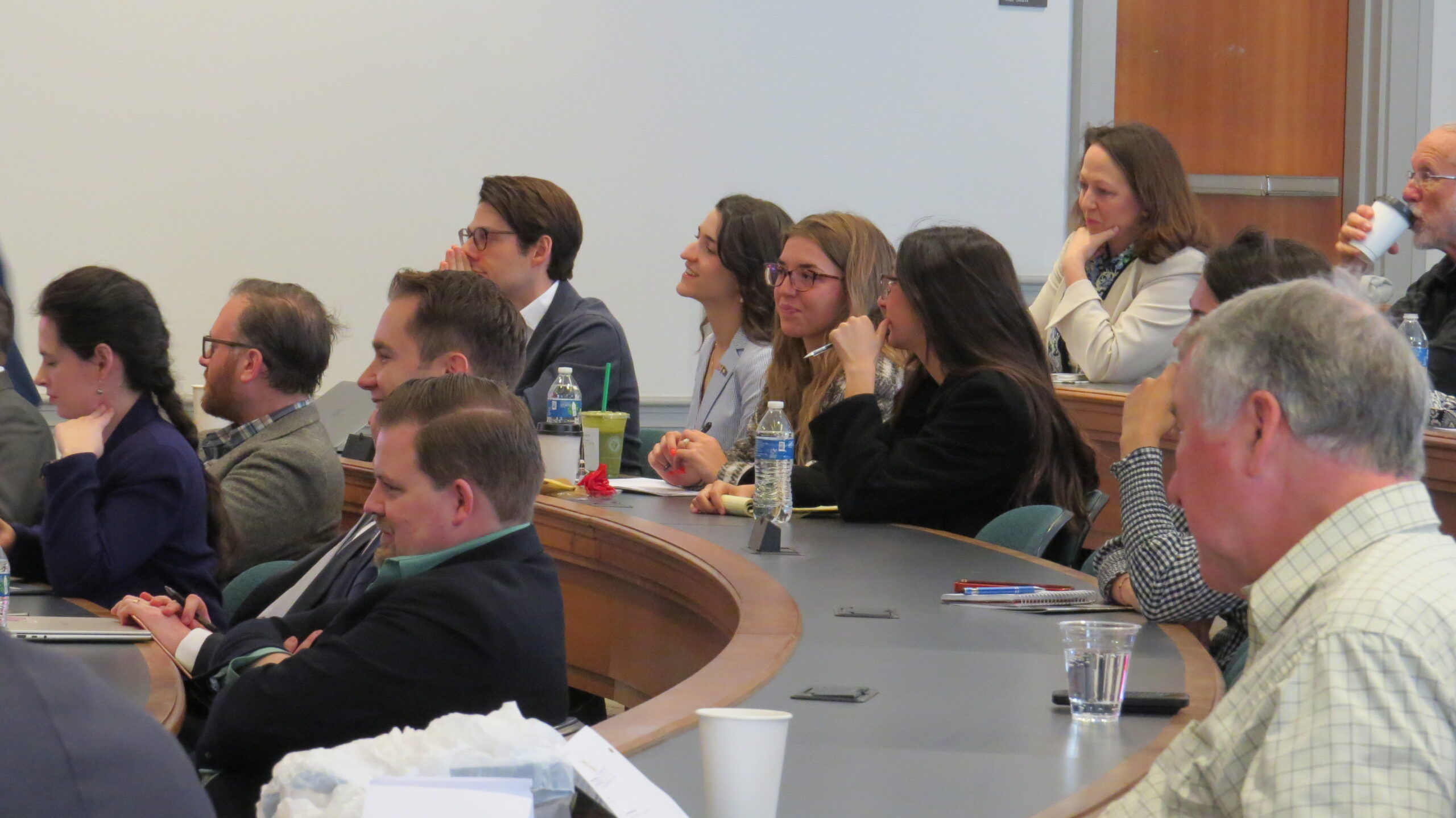
In opening remarks, Munoz discussed whether the American Revolution was justified according to Catholic teaching. While he said he is a political science professor, not a historian, he argued that the principle of consent of the governed is part of natural law and if the people favored a change in government and revolution was the only way to achieve that, he believed the war was justified.
Lewis said the Founders all believed in a natural law but that their conception of where that comes from differed. He also said that, while the Catholic intellectual tradition’s conception of the natural law is largely grounded in a Thomistic-Aristotelian understanding of the natural law, the founders primarily followed the influence of thinkers like John Locke rather than Christian and ancient philosophers.
Despite that, though, Lewis said Catholicism has flourished in the United States more so than in any other modern country, a sign that the equality established by the founders that guarantees religious freedom gave rise to a positive environment for the Church.
Schindler discussed the classical liberal order established by the Declaration of Independence, something he said he believes is “crumbling.” He argued that the American system of government would “best be salvaged” by shifting the view of the Catholic intellectual tradition to “authoritative.”
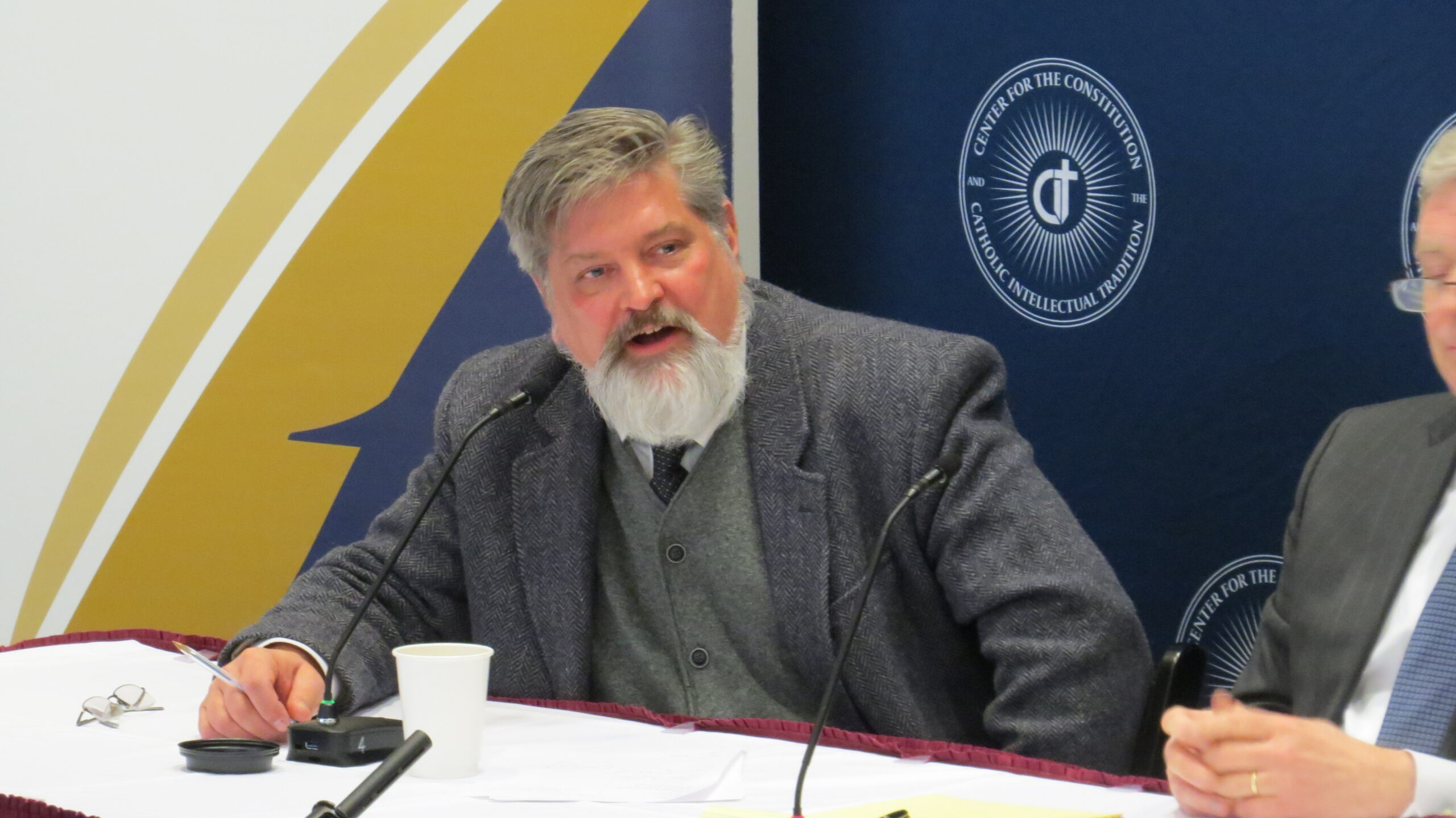
Schindler continued to say that this would not “imply theocracy or integralism” but saying that Catholicism is no longer compatible with liberalism because values Americans used to hold in common with the Church are in danger in the modern U.S. Munoz replied by calling Schindler’s take a “straw argument” and told Schindler, “you’re trying to teach young Catholics that [the Declaration] is anti-Catholic.”
Schindler replied that he was only trying to defend the original values of the Church and of the U.S., which he believes differ from the modern country.
The event also featured a fireside chat with Dr. Robert George from the University of Princeton. George, a well-known political thinker, discussed the ideals of the Declaration of Independence.
George argued that the rights the founders guaranteed in the Constitution are all part of the natural law given by God. He said that there is no way to view these rights without acknowledging at some point that they emanate from God and from Scripture. He pointed to the first chapter of the Book of Genesis, “just about the oldest thing we know,” which includes support for some of the rights George discussed.
George also said that Thomas Jefferson, the principal author of the Declaration, said in his writings that he was influenced both by Scripture and by classical liberal thinkers, both ancient and modern. He added that Genesis is the grounding for the Catholic teaching that every person is made in the image and likeness of God, which is the ultimate basis for any argument that all men are equal, which is the foundation for the rights guaranteed in the Constitution and referenced in the Declaration of Independence.
The conference in its entirety was filmed and will be published by the University of Notre Dame online.